
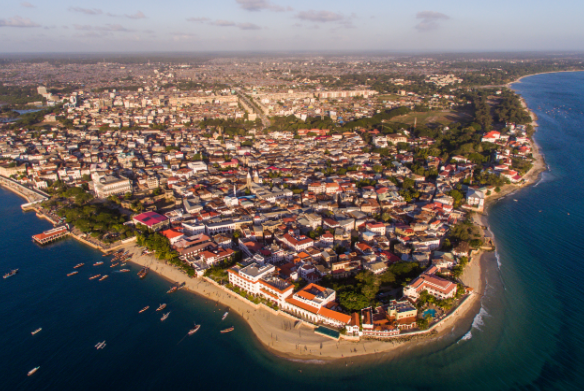
Is Stone Town Worth Visiting? Everything You Need to Know Before You Go
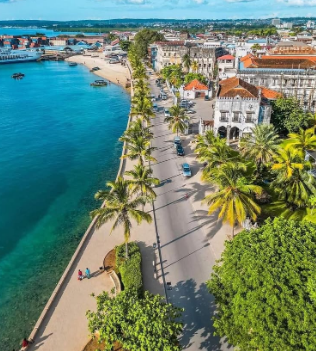
Stone Town is not the kind of place you tick off a list and forget. It stays with you. The narrow coral-stone alleys, the smell of cloves drifting from open shop doors, the carved wooden doors that once signalled a family's wealth, the sound of the call to prayer echoing between rooftops — this is a city that has been continuously inhabited for over a thousand years, and it shows in every corner.
But is it worth your time on a Zanzibar holiday? That depends on what you are looking for. If you want nothing but white-sand beaches and resort cocktails, you can skip it. If you want a place with depth — real history, real culture, real food, and real people — Stone Town is essential. Below, we break down exactly what makes it worth visiting, what to see, and what to expect.
Why Stone Town Is a UNESCO World Heritage Site
Stone Town was inscribed as a UNESCO World Heritage Site in 2000 for being a fine example of the Swahili coastal trading towns of East Africa. What makes it unique is that it has retained its urban fabric and townscape almost entirely intact. The city has absorbed and blended African, Arab, Indian, and European influences over more than a millennium — through Portuguese, Omani, British, and Indian rule — and that layering is visible in its architecture, its food, its language, and its people.
Walking through Stone Town is like walking through a history book that never closed. That alone makes it worth visiting.
The Real History: The Slave Market
The most important reason to visit Stone Town is also the most painful. For centuries, Zanzibar was the centre of the East African slave trade, and Stone Town hosted one of the largest and most brutal slave markets in the world.
Today, the Anglican Christ Church Cathedral stands on the exact site of the old slave market. The Slave Market Memorial, created by Swedish artist Clara Sornas in 1998, is a moving tribute to the millions of people who passed through. A circle of white stones marks where the whipping post stood; the outer circle of red stones represents the blood that was shed.
A local guide will tell you the stories — of the crowded dhows that crossed from the mainland, of the underground holding chambers where hundreds of people were kept, of the abolition of the trade in 1873. It is heavy, but it is necessary, and it is one of the most powerful experiences you can have in East Africa.
The Famous Carved Doors
Stone Town has more than 500 carved wooden doors, each with a story. They are the most photographed feature of the old city and one of the reasons it feels so timeless.
- Swahili doors — the oldest, decorated with geometric patterns inspired by nature, waves, and local tradition
- Arab/Omani doors — larger, framed with Quranic inscriptions and flowing Islamic designs, signifying prestige
- Indian/Gujarati doors — heavy with brass studs, originally to protect against war elephants in India, later a display of merchant wealth
Families once spent more on the door than on the house behind it. Today, the doors remain the city's signature.
The Landmarks You Should Not Miss
Stone Town is walkable — you can cover the main sites in three to four hours on foot. The must-see landmarks include:
- Old Fort (Ngome Kongwe) — a 17th-century Omani fort with an open-air amphitheatre and craft market
- House of Wonders (Beit el-Ajaib) — the largest building in Stone Town, once the Sultan's palace, currently under restoration
- Forodhani Gardens — the seafront gardens and evening food market, the social heart of the city
- Darajani Market — Zanzibar's main bazaar for spices, fish, and produce
- Freddie Mercury's childhood home — the modest birthplace of the Queen frontman
- Hamamni Persian Baths — an 18th-century public bathhouse
- Old Dispensary — a beautifully restored Indian-style building near the waterfront
Each of these sits within easy walking distance of the others, which is one of the reasons Stone Town works so well as a half-day walking tour.
The Food Scene Is a Reason on Its Own
The Forodhani Night Market is one of the great food experiences in East Africa. Every evening from around 7 PM, vendors set up along the seafront and grill fresh seafood, chicken, and beef skewers called mishkaki. You can try Zanzibar pizza (a stuffed flatbread, nothing like Italian pizza), urojo (a tangy Zanzibar mix of chickpeas, potato, and mango), fresh sugarcane juice, and much more — all for a few dollars.
Beyond the night market, Stone Town has several excellent rooftop restaurants in restored historic buildings, where you can eat fresh seafood and watch the sun set over the harbour. The rooftop sunset in Stone Town is one of East Africa's great travel experiences.
Is Stone Town Safe?
Yes, Stone Town is generally safe for tourists during the day and in the evenings in the main tourist areas. As with any busy historic city, there are a few things to keep in mind:
- Avoid walking alone late at night in quiet alleys
- Keep an eye on your belongings in crowded markets
- Be cautious of persistent street touts (locally known as papaasi) — politely decline and walk on
- Dress modestly (shoulders and knees covered), especially near mosques and residential areas
- Use licensed guides or hotel-arranged tours
With basic common sense, Stone Town is a friendly and welcoming place.
Best Time to Visit Stone Town
Stone Town is accessible year-round, but the best months are:
- June to October — dry season, cooler temperatures, ideal for walking
- January to February — warm and dry, perfect for combining with a beach holiday
- March to May — long rains; fewer crowds and lower prices, but expect short showers
Mornings (7:30–10:30 AM) are the best time to start a walking tour — cooler, quieter, and much better for photography.
How to Visit Stone Town Properly
You can explore Stone Town on your own, but a guided walking tour with a local Zanzibari guide transforms the experience. Guides bring the history to life, explain the significance of the slave market and the doors, introduce you to the food, and help you navigate the maze of alleys — which is genuinely confusing on a first visit.
Our Stone Town Walking Tour with Morishas Tours and Safaris includes a professional local guide, entry fees to the slave market and Old Fort, a visit to Darajani Market and spice shops, bottled water, and government taxes. It takes about 3 to 4 hours on foot and is designed for small groups or private departures.